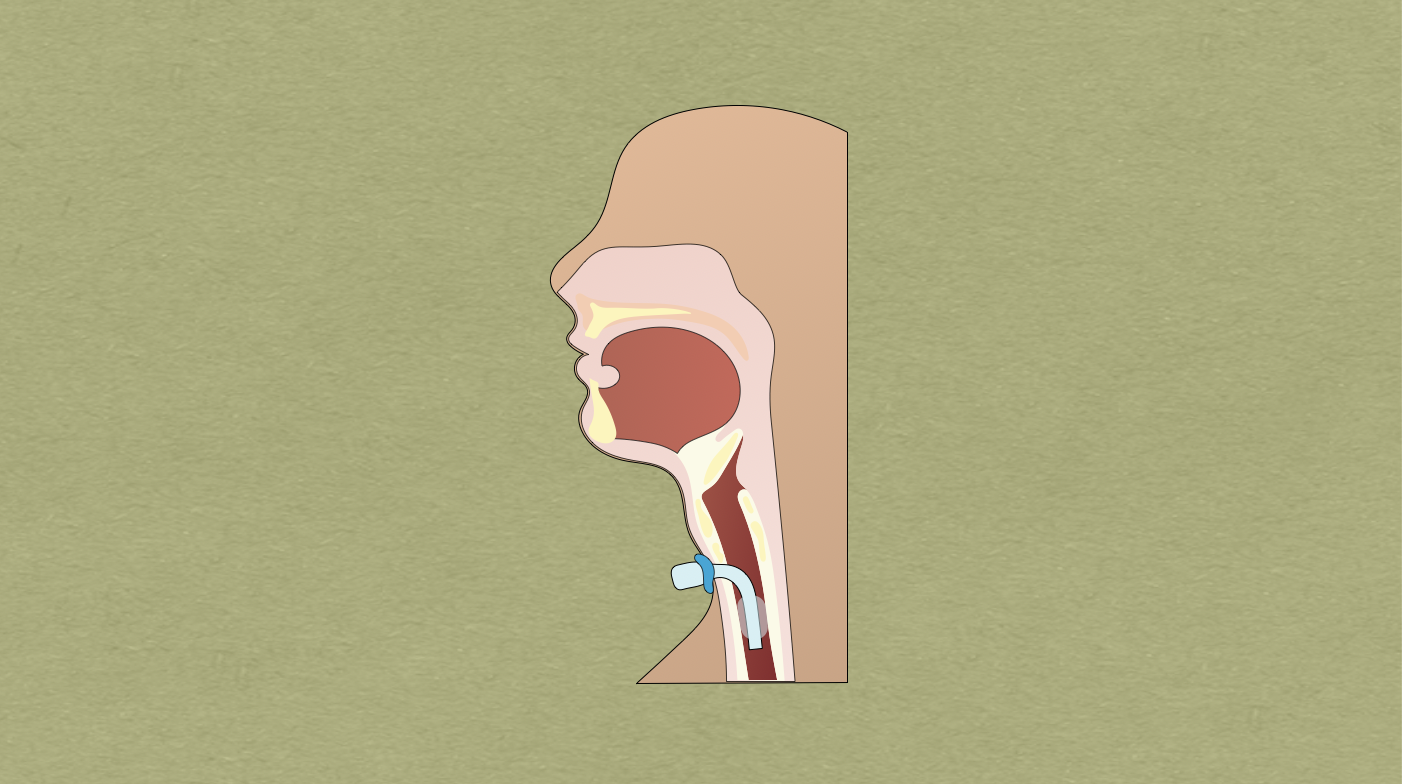
Tracheostomy is a surgical procedure to create an airway to the trachea. It appears to be first described in Egyptian artifacts dating to 3600 BC. Later on, it was described in the 7th century by Paul of Aegina and in 1543, Andreas Vesalius wrote about how the procedure could be life-saving. In 1546, Brasavola is credited with the first successful tracheostomy. Hieronymous Fabricius described a technique for tracheostomy in his writings though he never performed the procedure himself.
Indications
- Ventilatory weaning (most common indication) → for pts w acute respiratory failure unable to be liberated from mechanical ventilation in ICU
- Airway obstruction at level of larynx etiologies
- Laryngeal tumors
- Edema
- Fracture
- Foreign bodies
- Burns about oropharynx
- Severe throat and neck infections
- Chronic or long-term respiratory problems
- Inability to cough out tracheobronchial secretions in paralyzed/weakened patients
- Prolonged unconsciousness after drug intoxication, head injury, or brain surgery
- Bulbar or thoracic paralysis (eg, poliomyelitis)
- Patients w general debility, especially in presence of pulmonary infection or abdominal distention
- Inability to maintain an adequate gas exchange or oxygen or carbon dioxide
- Patients undergoing major operative or radical resections of mouth, jaw, or larynx
Contraindications
- High ventilator settings
Preoperative Considerations
- Cuffed trachea → airway protection
- Uncuffed trachea → no airway protection
Setup
- Sandbag/folded sheet under shoulders to extend neck
- Lower head rest of operating table
Surgical Technique
- Emergent
- Transverse incision/stab through cricothyroid membrane
- Hold wound open with handle of knife blade in wound
- When airway is ensured, patient is moved to OR and routine tracheotomy performed
- Elective
- Transverse incision between thyroid cartilage and suprasternal notch (2nd or 3rd tracheal ring, 1 cm below cricoid cartilage)
- Skin > subcutaneous tissue > platysma > cervical fascia > sternohyoid > pretracheal fascia > thyroid isthmus > trachea
- Thyroid isthmus retracted upward or divided using electrocautery or suture ligation
- Stay suture is paced using 2-0 Prolene on RB-1 (small tapered needle) around the 3rd tracheal ring, making sure the endotracheal cuff is deflated while placing the stitch
- H-shaped incision is made through the 3rd ring once the endotracheal cuff is deflated by using an 11- or 15-blade. A tracheal spreader is used to dilate the opening. Endotracheal tube is slowly removed by anesthesia until the tip is just proximal to the tracheostomy site. Tracheostomy tube with stylet is then inserted at a 90º angle. Stylet is then removed and inner cannula is placed and connected to the ventilator.
- Tracheal tube is inserted
- Size 8 cuffed (traditionally, then downsized to size 6 cuffed)
- No. 6: adult male
- No. 5: adult female, child
- No. 00 or 0: newborn
- Tracheostomy tube is secured with tracheal ties/collar
- Prevent subcutaneous emphysema
- Only close skin
- Ties to hold tube in place
- Dressing made by cutting surgical gauze and pulling it under tube
Postoperative Considerations
- Inner tube must be cleaned every 1-2 hrs to prevent blockage with accumulated secretions
- Day 2-3
- Tract has formed
- Outer tube may be removed, cleaned, and replaced
- Stoma can constrict sufficiently in 15-20 min, so replace rapidly
- Blood pH and blood gases
- Chest XR to evaluate for proper distance of tracheostomy tube tip to carina