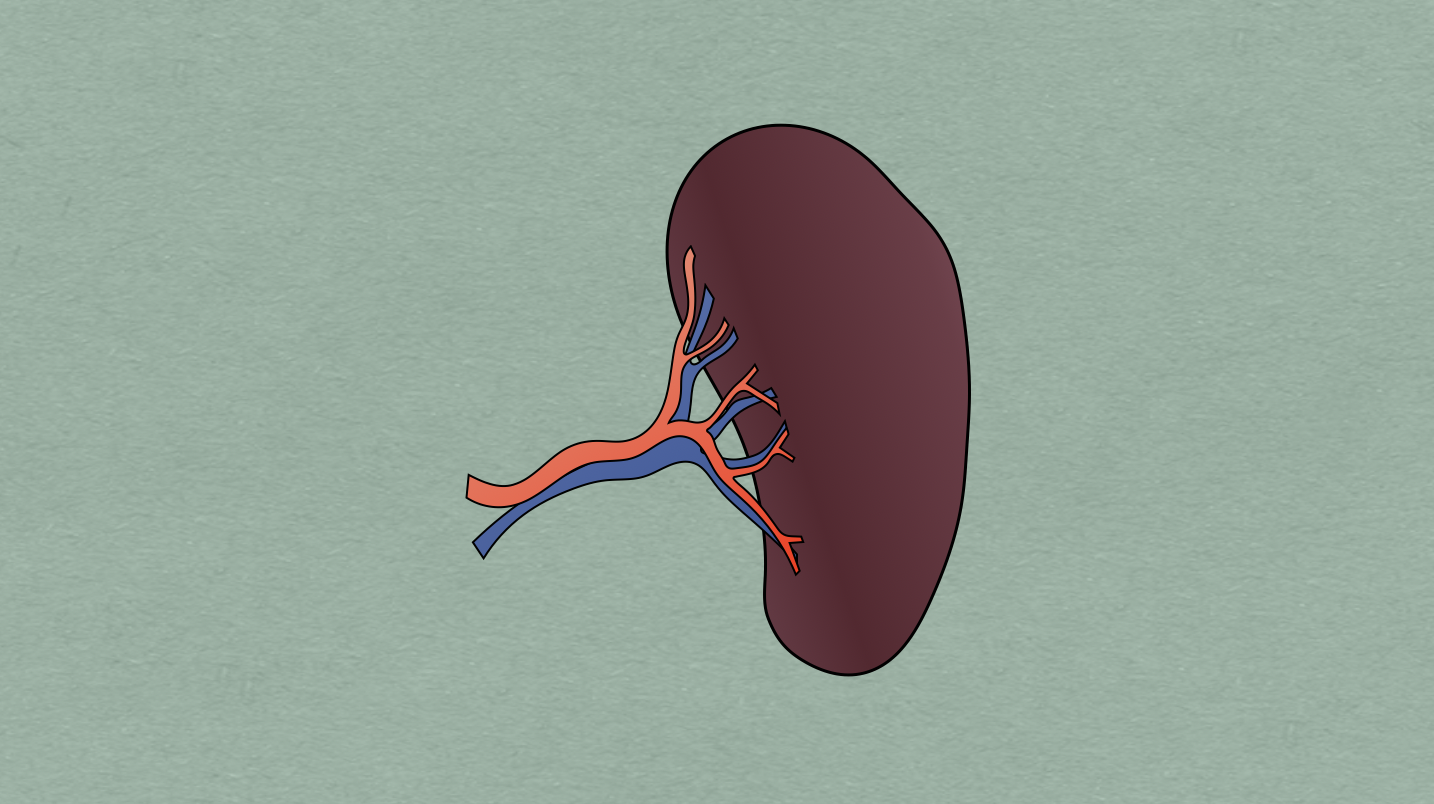
The spleen derives its named from the ancient Greek word splēn, used for the organ itself and also as a metaphor for melancholy and ill-tempered. This figurative use of the word was made more popular by the French poet Charles Baudelaire. Knowledge surrounding the spleen and its anatomy made large strides in the 13th century and continued into the 1980s and 1990s.
Location
- Lies in left lower thorax
- Protected by left ribs 9 through 11
- Not normally palpable below costal margin in normal healthy adult
Ligaments
- Multiple peritoneal reflections are referred to as “ligaments” (note: they are not true ligaments)
- Splenophrenic ligament
- Superior pole to diaphragm
- Avascular
- Gastrosplenic ligament
- Hilum to greater curvature
- Superior aspect: short gastric vessels
- Inferior aspect: left gastroepiploic artery
- Splenorenal ligament
- Hilum to left kidney
- Carries splenic artery/vein and tail of pancreas
- Splenocolic ligament
- Inferior pole to colon
- Avascular
Vasculature
- Spleen blood supply
- Splenic artery → branch off of celiac trunk, running superior to pancreas
- Short gastric arteries
- Variations of splenic artery with relationship to splenic hilum
- Distributed type (70%): splenic artery is short trunk and has 6-12 long branches that enter the spleen
- Magistral type (30%): splenic artery branches into terminal and polar arteries near splenic hilum
- Splenic vein
- Formed by several splenic veins and left gastroepiploic vein
- Travels posterior to pancreas
- Posterior and inferior to splenic artery
- Becomes inferior mesenteric vein after joining with pancreatic branches and eventually becomes portal vein
Divisions
- White pulp → immune function
- Red pulp → filters damaged/aged red blood cells and debris
- Marginal zone → where white and red pulp interface
Accessory Spleen
- Must search for accessory spleens when performing splenectomy for hematologic conditions. If they aren’t removed in these cases, the patient will fail to show improvement as there is still splenic tissue.
- Scintigraphy with Tc-nanocolloid is helpful in locating
- Accessory spleen locations
- Splenic hilum (most common)
- Pancreatic tail
- Splenic pedicle
- Splenocolic ligaments
- Greater omentum