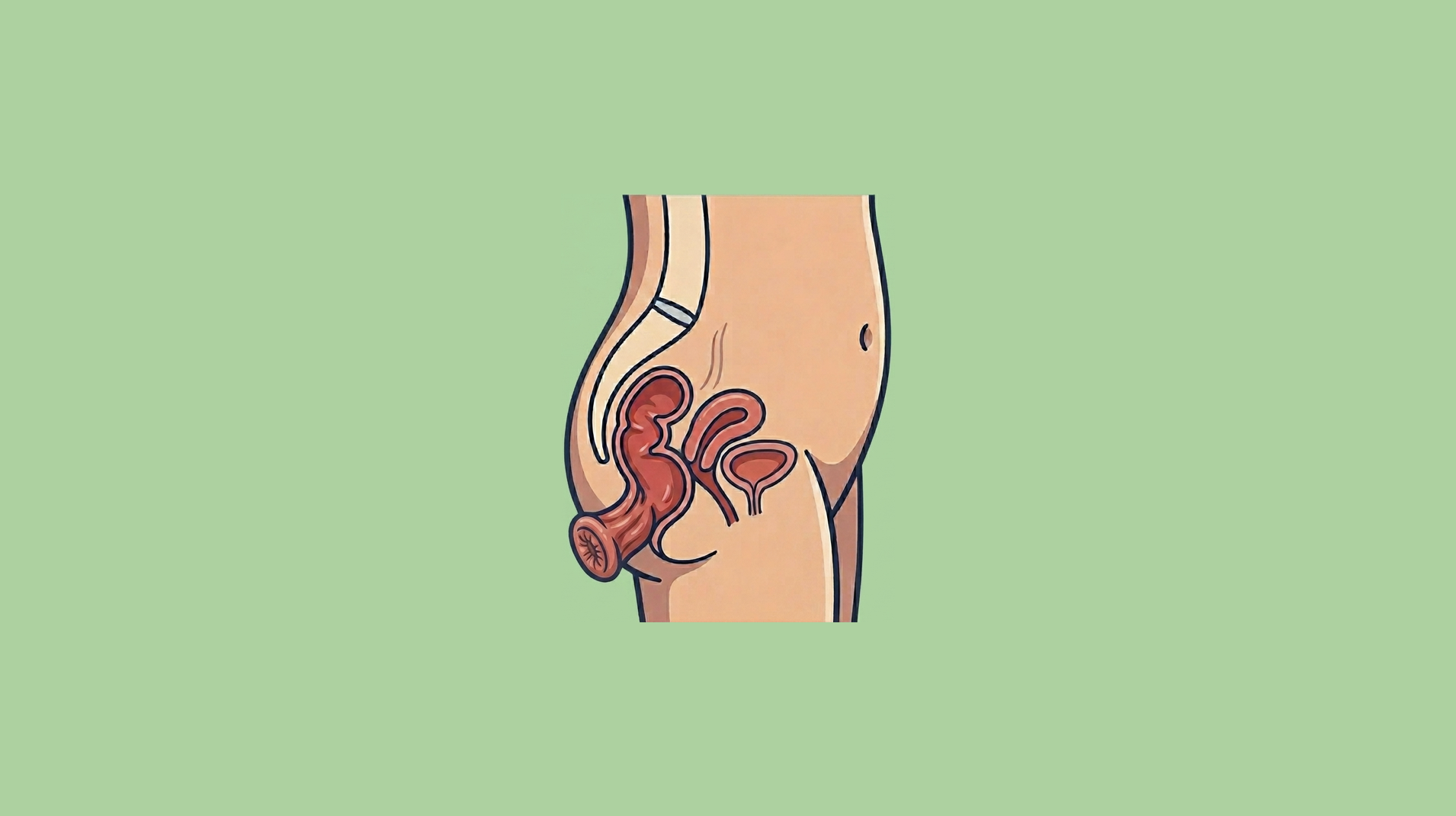
Rectal prolapse occurs when the rectum slips out of the anus. Multiple treatments for this condition have been developed over the years. Perhaps most notably are the Delorme and Altemier procedures, which are reviewed below. Edmond Delorme first published his procedure in the 1900. In the 1970s, Altemeier championed his own approach.
Etiology
- Bimodal distribution
- Children within 3 years
- Affects sexes equally
- Associated with diarrhea
- Can be self-limited
- After seventh decade
- More common in women
- Prevalence increases with age
- Children within 3 years
- Risk factors
- Constipation
- Multiple pregnancies
- Prior pelvic surgeries
- Female
- Redundant sigmoid
Presentation
- Rectal pressure/pain
- Blood/mucus discharge
- Rectal bleeding
- Fecal incontinence
- Chronic constipation
- Urinary incontinence and vaginal vault prolapse (30%)
Workup
- Circumferential rings → full rectal prolapse
- Radial folds → mucosal prolapse/prolapsing hemorrhoids
- DRE: lax anal sphincter, diminished squeeze effort
- Anal physiology testing
- Low resting tone
- Diminished squeeze efforts
- Prolonged pudendal motor nerve terminal latency
- Proctosigmoidoscopy: erythematous, edematous rectal mucosa
- Defecography or dynamic MRI: redundant, prolapsing rectosigmoid
- Colonoscopy is necessary to rule out tumor as a lead point
Treatment
- Overview
- Acute → reduce prolapse
- Adjuncts
- Table sugar (absorbs water and reduces edema)
- Perianal muscle paralysis
- General anesthesia (relaxation)
- If strangulated: emergent surgery
- Adjuncts
- Chronic
- Pediatrics: medical management (fiber)
- Adults: surgery (medical management if unfit for surgery)
- Short segment (<5 cm) → Delorme procedure
- Long segment (>5 cm) → Altemeier procedure
- Acute → reduce prolapse
- Medical management
- Pelvic floor physical therapy
- Refrain from straining, heavy lifting, standing for prolonged times, and avoidance of constipation (e.g., fiber)
- Surgery indications
- Rectal prolapse
- Discomfort
- Leakage of mucous or stool
- Full fecal incontinence
- Incarceration
- Strangulation
Surgery
- Perineal procedures → decreased morbidity, shorter hospital stays, quicker postoperative recoveries
- Perineal proctosigmoidectomy (Altemeier procedure)
- Once patient is positioned and prepped, rectum is prolapsed through anal canal using Babcock clamps. Mucosal layer injected with epinephrine two cm above dentate line to facilitate dissection and decrease bleeding.
- Lone Star retractor used to evert anal canal and circumferential incision is made two cm above dentate line. Electrocautery used to complete dissection circumferentially.
- After division of mucosal layer, dissection of submucosal layer can be done slowly to minimize bleeding. Blood supply to rectal wall resides within submucosal layer. Incision is completed full thickness through rectal wall.
- Pouch of Douglas then entered between rectum and vagina and extend dissection laterally. Posterior mobilization of redundant mesorectum and mesorectal vessels is done after completion of anterior and lateral dissection. Rectum is placed under tension and redundant mesorectum is divided sequentially. Palpation of intraperitoneal contents is feasible through the open pouch of Douglas. Dissection carries posteriorly until all redundant bowel has been mobilized. Prior to division of the colon, the peritoneum of the pouch of Douglas can be excised and closed with absorbable suture.
- Posterior levatorplasty is done prior to dividing the colon. Palpation of levator ani muscles ensures correct placement of sutures. 0-Vicryl or nonabsorbable sutures can be placed. Typically 2-3 sutures are necessary to plicate the posterior anal canal.
- Level of the redundant colon to be transected is identified and marked circumferentially using electrocautery. Handsewn or stapled anastomosis can be done at this time. Absorbable anastomotic sutures (3-0 Vicryl) are placed through anal mucosa in all four quadrants and tagged with the needles on. One-half of the colon is divided and the remaining sutures are placed. Helpful to tie these sutures after they have all been placed to avoid undue tension on the bowel welall. Placement of sutures in this manner will ensure proper spacing since there will be size discrepancy between proximal colon and anal canal.
- Mucosal sleeve resection (Delorme procedure)
- Avoids full-thickness rectal resection
- Rectum is prolapsed through anal canal using Babcock. Submucosal layer injected with epinephrine approximately 2 cm above dentate line to facilitate dissection and decrease bleeding. Circumferential incision is made 2 cm above dentate line and completed through mucosal and submucosal layer.
- Submucosal layer dissected with electrocautery along the length of prolapse elevating it off underlying muscular layer of the rectum. Extent of dissection is determined by placing traction on the rectum delivering the entire prolapse through the anal canal until tension is noted. Absorbable sutures are then placed in the muscular layer creating an accordion effect.
- Sutures are placed longitudinally beginning at the outer edge and ending just above the dentate line. Stripped mucosa is resected after sutures are placed circumferentially around rectum. Muscular sutures are tied and mucosal anastomosis is completed with absorbable sutures circumferentially around anal canal.
- Mean time to recurrence: 2-3 years
- Anal encirclement (Thiersch procedure)
- Encircle and reinforce anal sphincter with nylon, silicone tubing, or Marlex mesh
- Reserved for patients with limited life expectancies due to high septic and mechanical complications
- Limited anesthesia risk as it can be completed under local
- Thiersch wire or synthetic material to encircle anal canal to prevent prolapse.
- Two small incisions lateral to external anal sphincter in perineum. The submucosal tunnel created around the anus and mesh is placed through one of the incisions and advanced around the anal canal. Length of mesh and tension are determined by surgeon by placing an index finger in the anal canal placing the mesh snug enough to prevent prolapse while allowing enough room to eliminate stool
- Doesn’t eliminate redundant rectosigmoid nor eliminate rectum from descending into anal canal.
- Fecal impaction is common after
- Perineal proctosigmoidectomy (Altemeier procedure)
- Transabdominal procedures → lower recurrence rates, higher morbidity; generally reserved for younger patients
- Sutured rectopexy
- Mesh rectopexy
- Resection rectopexy
Resources
- Clinical Practice Guidelines for the Treatment of Rectal Prolapse (ASCRS)
- Rectal Prolapse (ASCRS)
- Treatment of Rectal Prolapse (ASCRS – 2017)
- Altemeier Procedure (ASCRS)